
In this case study, learn how Luca Gallucci captures stunning images like this:
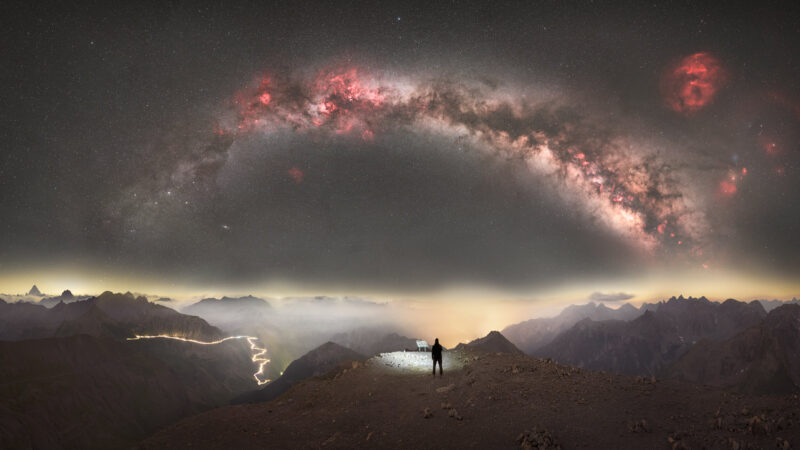
“I firmly believe that, in landscape photography, your best tools are your own legs: exploring, walking, and discovering new vantage points is what truly leads to unique images.”
Who are you, where are you located, and what is your focus in astrophotography?
Hi everyone! My name is Luca Gallucci and I live in the Marche region, in the heart of central Italy.
I’m a landscape photographer with a strong specialization in landscape astrophotography, the kind of photography that best allows me to bring together nature and the starry sky.
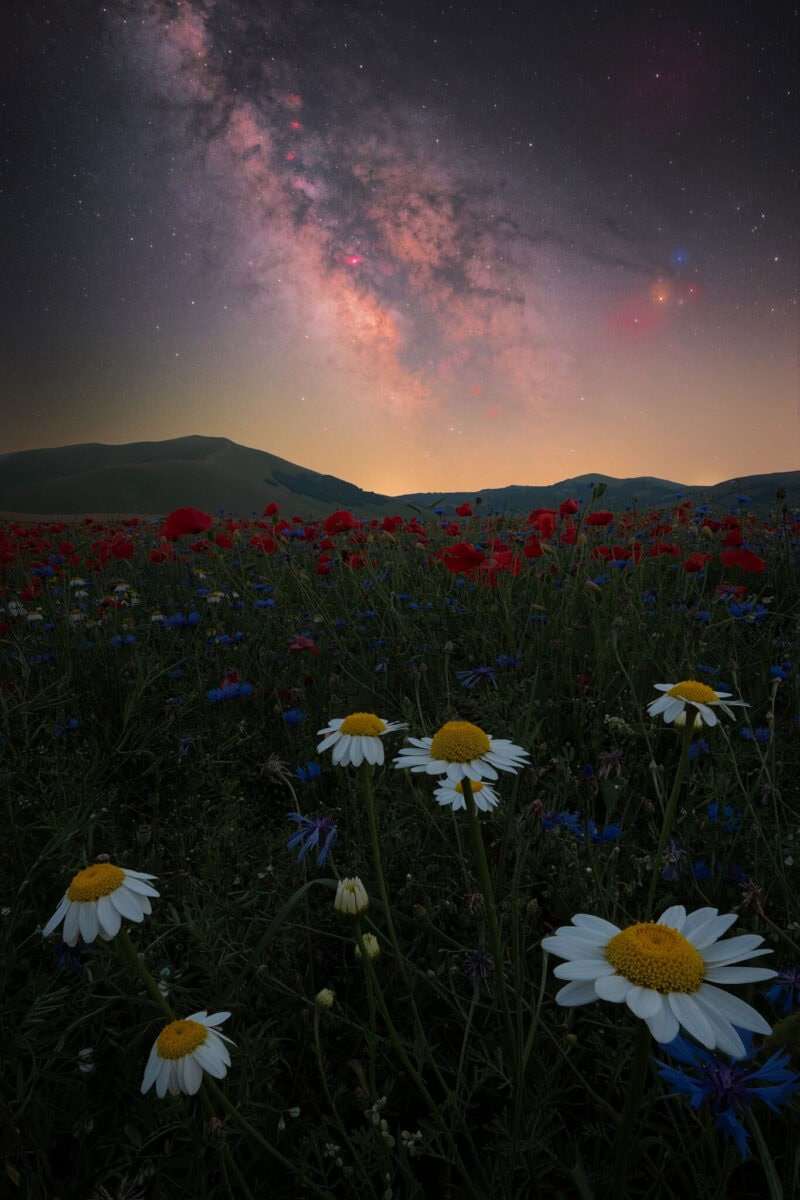
Most of my images are captured in the Sibillini Mountains National Park, about two hours from my home, a place that offers some of the most beautiful skies in Central Italy.
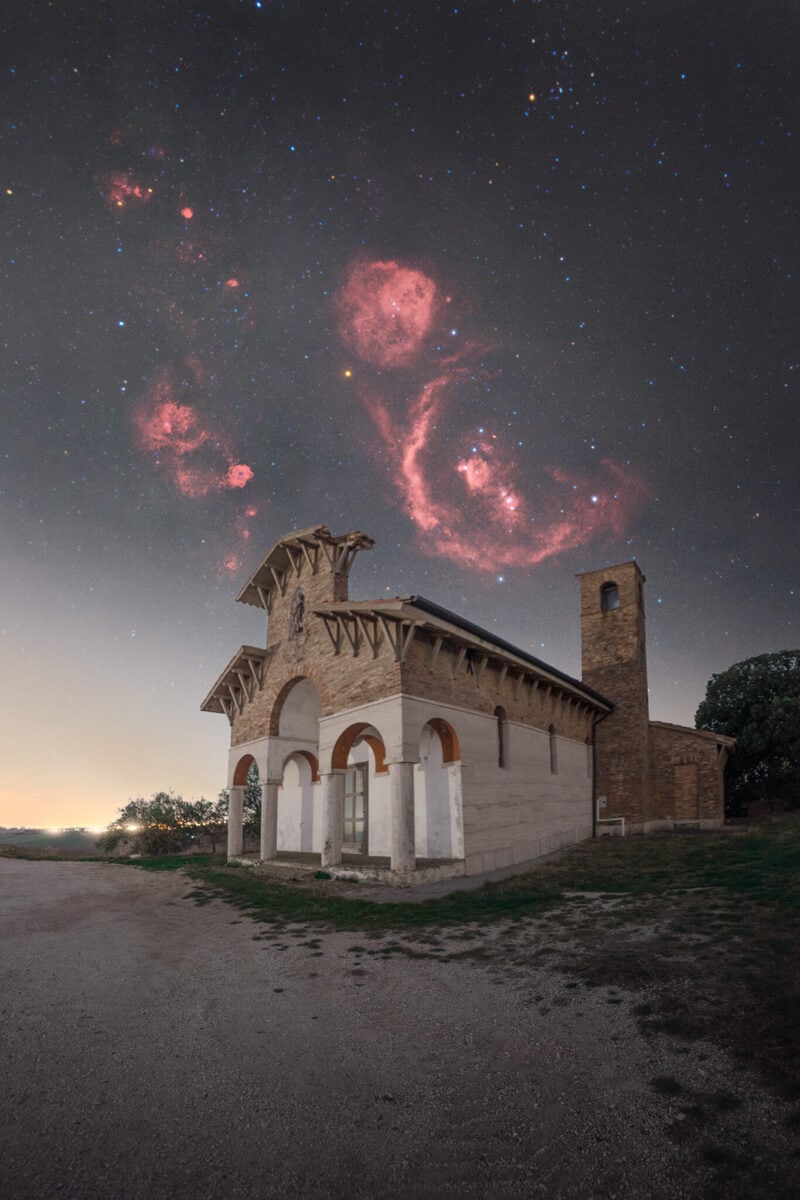
When I can’t travel, I take advantage of my local Bortle 4 sky to shoot wide-field deep-sky images, although my true focus always remains the combination of landscape and night sky.
Photography has taken me from the Arctic, where I watched the Northern Lights dance above me, to the deserts of the Middle East, such as Wadi Rum, always in search of untouched skies.
And in a few months, I’ll be flying to La Palma, home to some of the darkest and purest skies in the world, to continue this journey under the stars.
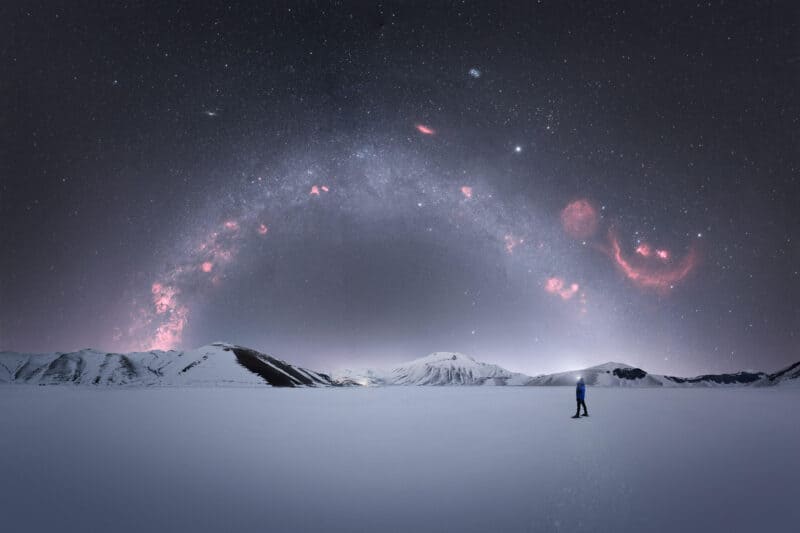
What’s your process?
My process always starts with careful planning.
I use apps like:
- PhotoPills
- Windy
- Google Maps
- And especially Planit Pro, which has become an essential ally for me.
Whenever possible, I also scout locations during the day: it helps me understand the terrain, the environment around me, and how the landscape will transform once the stars come out.
I firmly believe that, in landscape photography, your best tools are your own legs: exploring, walking, and discovering new vantage points is what truly leads to unique images.
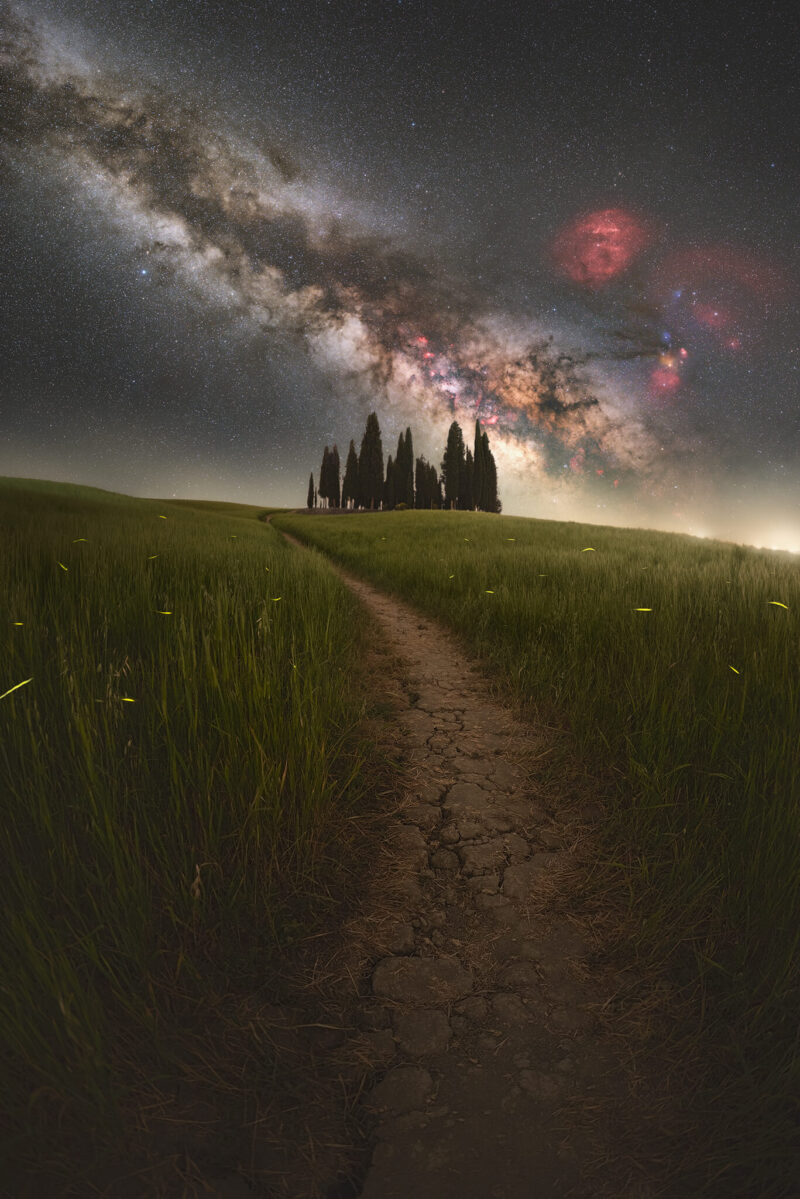
What gear do you use?
For landscapes and RGB sky shots, I use a Nikon D750 camera.
While for the H-alpha channel I rely on a Nikon D5600 with a Super UV/IR cut modification.
The most valuable upgrade I’ve ever made is without doubt this modification, made even more effective when paired with the STC Astroduo narrowband filter.
Adding H-alpha takes time, patience, and dedication, but the final result is incredibly rewarding.
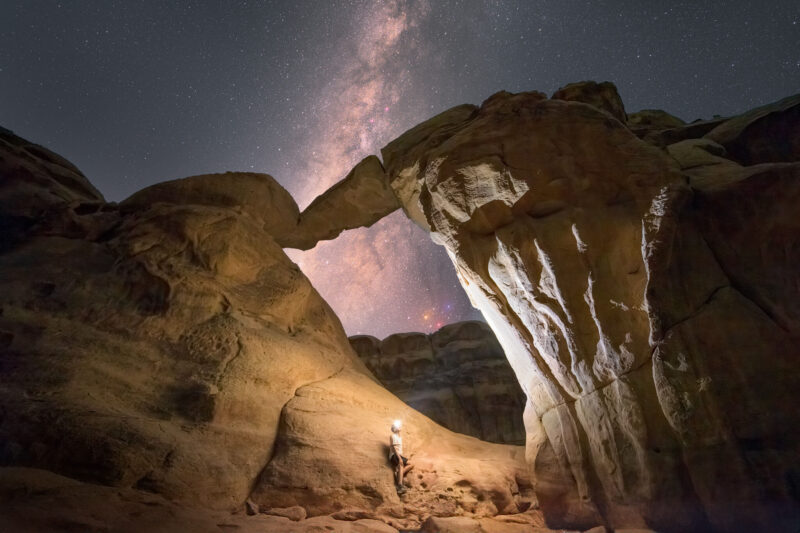
My main lenses are:
- Tamron 15–30 G2 f/2.8
- Samyang 12mm f/2.8
- Samyang 135mm f/2 (for wide-field deep-sky)
In my early days I used to shoot without a star tracker, but during the lockdown I bought a Star Adventurer and began capturing wide-field deep-sky images from home.
More recently, I also added a NOMAD tracker, kindly sent to me by Move Shoot Move for testing and review.
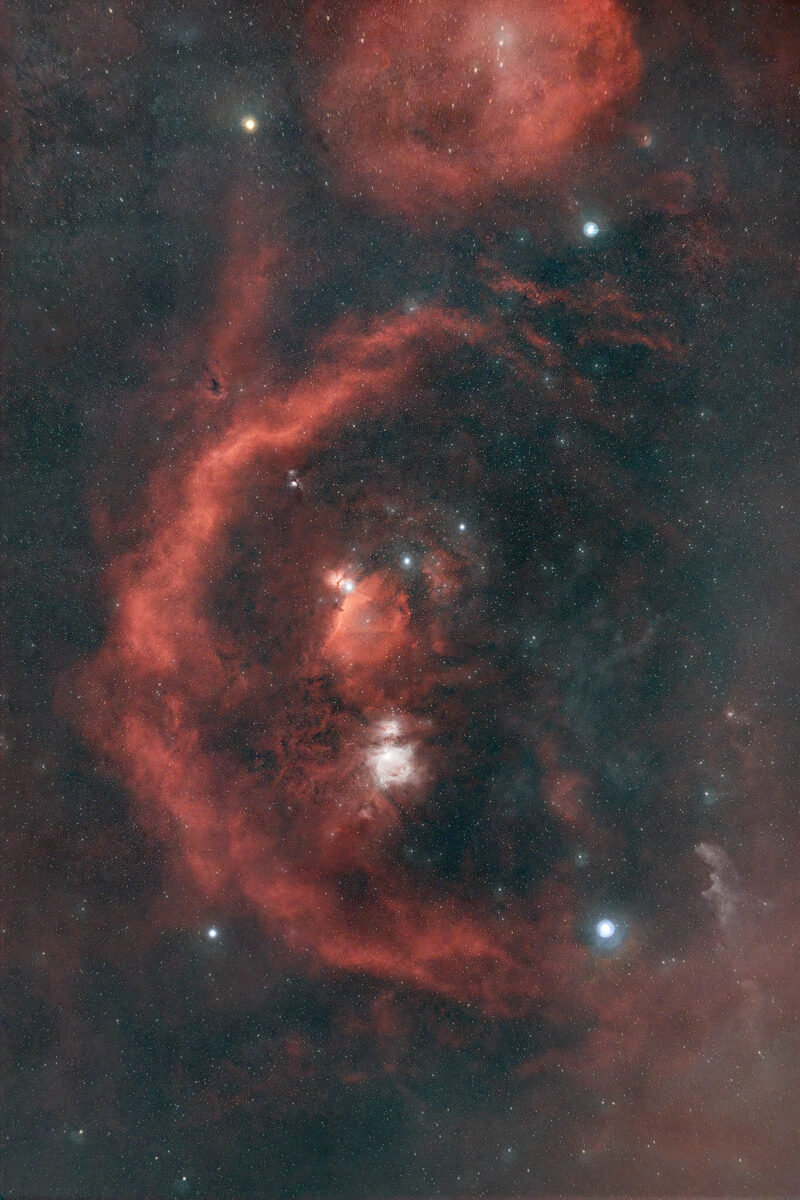
What do you use for post-processing?
For post-processing I use:
- PixInsight
- PTGui for panoramas
- Adobe Photoshop
- And occasionally DeepSkyStacker for stacking.
Are there any educational resources on astrophotography you would recommend?
Since I’m almost entirely self-taught, it’s hard to recommend a structured path, but I would definitely start with Stellarium, it’s essential for understanding the night sky and the many objects it contains.
I can also recommend the YouTube channels Astropills (Marco Rapino) and Luca Fornaciari, both of which have been extremely helpful to me.
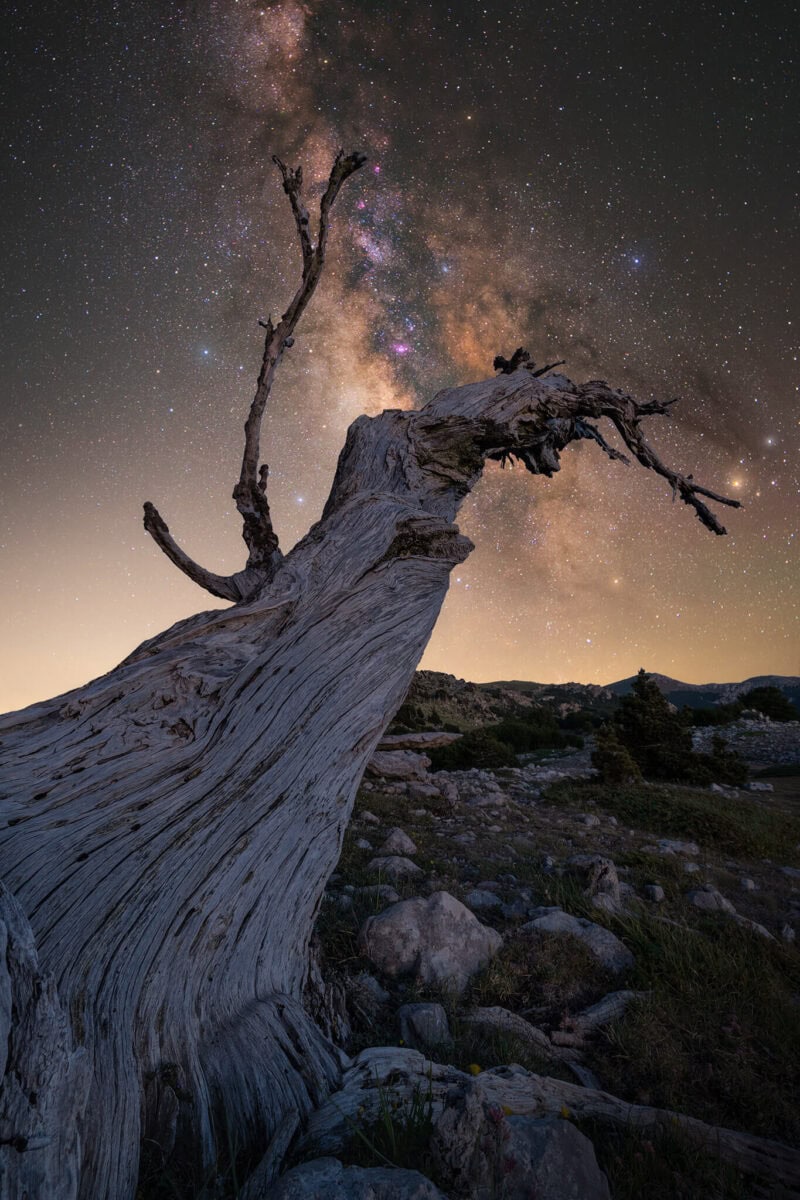
“Photography has taken me from the Arctic, where I watched the Northern Lights dance above me, to the deserts of the Middle East, such as Wadi Rum, always in search of untouched skies.”
Are you integrating AI into any of your photographic processes?
The only tools in my workflow that use this kind of technology are Noise, Blur, and StarXTerminator.
I always use them sparingly: when applied carefully, they can really enhance an image, but it’s very easy to go too far and introduce unwanted artifacts.
What achievements in astrophotography are you most proud of?
A few months ago, I won the International Photography Awards 2025 (IPA) in the Landscape Astrophotography category, an immense satisfaction, especially because I won with a photo taken in my beloved Sibillini Mountains.
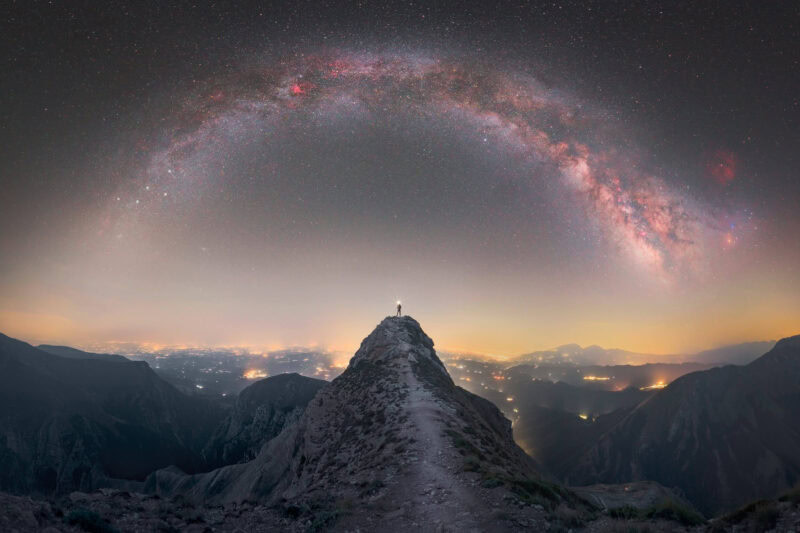
But beyond awards, what truly fulfills me is sharing the beauty of the night sky with others: explaining the basics of astrophotography, identifying constellations or nebulae together, or simply seeing the wonder on people’s faces as I tell them about my adventures.
Those are the moments that remind me how special it is to share this passion.