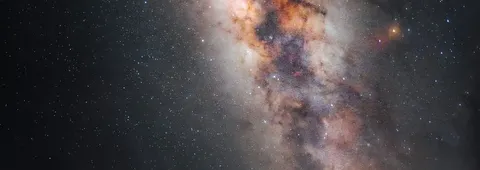
This guide breaks down the essential gear you need in 2026 to take your Milky Way photography to the next level.
From professional-grade setups to budget-friendly options that still deliver amazing results.
Read on or watch the video here:

The Three Non-Negotiable Essentials for Landscape Astrophotography
Having reviewed thousands of images for prestigious competitions like the Astronomy Photographer of the Year and Milky Way Photographer of the Year, and conducting over 50 case studies with top astrophotographers, I’ve gained unique insights into the equipment that truly makes a difference.
To capture stunning night sky landscapes, three pieces of equipment are absolutely crucial:
- A Camera: Specifically, a DSLR or mirrorless camera with interchangeable lenses.
- A Lens: One designed for wide-angle and low-light performance.
- A Tripod: Stability is paramount for long exposures.
A Star Tracker can significantly enhance your results later on, but it’s optional when you’re just starting out.
Choosing the Best Camera for Astrophotography
When it comes to cameras, not all are created equal for the unique demands of astrophotography.
Here’s what the pros look for:
Sensor Type: Full-Frame Reigns Supreme
100% of top-tier astrophotographers use full-frame sensor cameras
Why? Two main reasons:
- Superior Low-Light Performance: Full-frame sensors inherently perform better in low light, which is critical when you’re trying to capture faint starlight in the darkest skies.
- Wider Field of View: Full-frame sensors capture a wider expanse of the night sky compared to APS-C cameras (which “crop in” your view) when using the same lens. This allows for more expansive and immersive landscape compositions.
DSLR vs. Mirrorless: The Shift is Happening
While both DSLR and mirrorless cameras can work, the industry is seeing a clear trend:
- Mirrorless Advantages: Mirrorless cameras are generally lighter, which is a blessing when hiking to dark-sky locations. They also offer a “live view” screen that provides a real-time preview of your exposure, a feature not found in older DSLRs.
- The Data Speaks: My analysis of Astrophotography of the Year entries shows a clear crossover. DSLRs once dominated, but now mirrorless cameras are almost exclusively used by top photographers, a trend mirroring the broader photography market.
Top Camera Brands: Nikon, Canon, and Sony
For serious astrophotography, the choice of brand is quite concentrated: Nikon, Canon, and Sony.
Nobody really uses anything else at the professional level.
While Canon once led in the DSLR era, and Sony took the lead during the transition to mirrorless, all three brands are now producing excellent mirrorless full-frame options.
The Right Resolution: 20-30 Megapixels
Most successful astrophotography cameras fall into the 20 to 30 megapixel range. This strikes an ideal balance:
- Detail Retention: It provides enough resolution for fine detail, essential for printing large or displaying on high-resolution screens.
- Manageable File Sizes: Going much higher (e.g., 60+ megapixels) can lead to massive file sizes that can strain your laptop during processing and demand significant storage.
Top Recommended Camera Models for 2026
- Standout Performer: Sony A7 III
- Specs: Full-frame mirrorless, 26 megapixels.
- Why it’s great: Ticks all the boxes, highly proven, and relatively affordable as a mid-range model now that it’s a few years old.
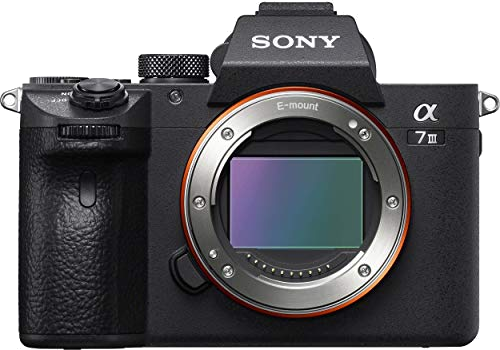
Full-Frame Mirrorless Interchangeable Lens Camera
- No.1 Camera in Astronomy Photographer of the Year
- Light Weight, High-Quality
- 24.2 Megapixel Resolution
- Sony UX can be hard to master
You can also consider the newer iterations in the range, the Sony A7 IV and Sony A7 V.
These have some functionality upgrades, but are naturally more expensive.
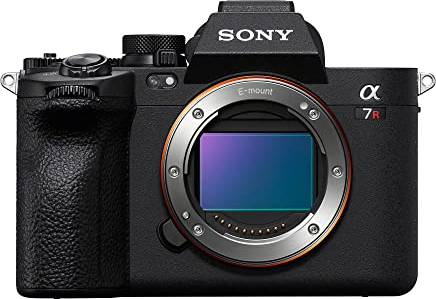
Premium Upgrade: Sony A7R V
- Specs: 61 megapixels (be mindful of larger file sizes!).
- Why it’s great: Top-tier performance for those who demand the absolute best and can manage the data.
Full-Frame Mirrorless Interchangeable Lens Camera
- Top Sony model
- 61.0 MP full-frame sensor
- High performing for astrophotography
- Premium Price
- Budget Option: Canon EOS RP
- Specs: Full-frame mirrorless, 26 megapixels.
- Why it’s great: The most affordable modern full-frame mirrorless camera on the market.
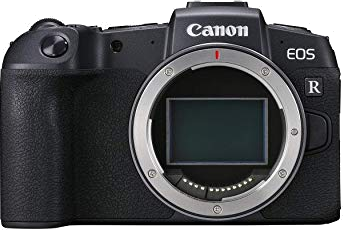
Full Frame Mirrorless Digital Camera
- Lightest, smallest full-frame EOS camera
- High image quality with 26.2 Megapixel Full-frame CMOS Sensor
- Cheapest full frame mirrorless camera on the market
Selecting the Best Lens for Astrophotography
Your lens choice is just as critical as your camera. You need two key characteristics:
- Wide Angle (Short Focal Length):
- Recommendation: 14mm to 24mm.
- Why: To capture a broad expanse of the night sky alongside your landscape foreground, allowing for impactful compositions and context.
- Fast Aperture (Low F-Number):
- Recommendation: f/1.4 to f/2.8.
- Why: A fast aperture allows more light to hit the sensor in less time, crucial for capturing faint starlight without excessively long exposures that lead to star trailing.
Lens Recommendations & Budget Options
(Image of a wide-angle, fast-aperture lens, perhaps showing the large front element.)
- Premium Option (for Sony): Sony GM 14mm f/1.8
- Why: A stellar performer that pairs perfectly with Sony full-frame cameras.
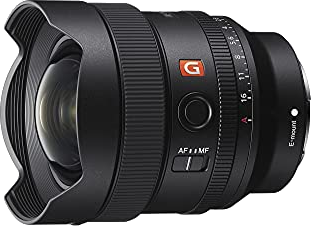
Sony FE 14mm F1.8 GM Full-Frame Large-Aperture Wide Angle Prime G Master Lens
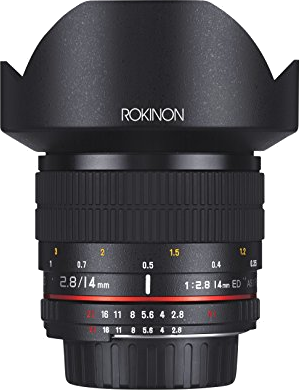
- Budget-Friendly Options: Rokinon / Samyang Lenses
- Why: These brands offer a great range of wide-angle, fast-aperture lenses (like 14mm f/2.8) that are incredibly affordable, often in the £200-£300 range.
- Compatibility: Remember to ensure the lens mount type (e.g., Canon EF, RF, Nikon F, Z, Sony E) is compatible with your camera body.
- Pro Tip to Save Money: For astrophotography, you’ll always use manual focus to precisely dial in sharp stars. You can often save money by choosing a manual-focus-only version of a lens, as autofocus isn’t necessary here.
The Essential Tripod
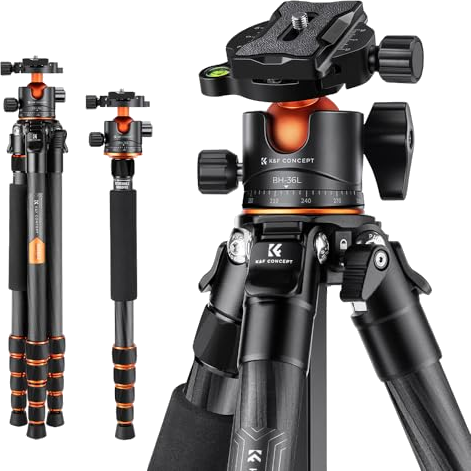
A stable tripod is non-negotiable for astrophotography. Long exposures require your camera to be absolutely still.
Carbon Fiber vs. Aluminum
- Carbon Fiber (Recommended):
- Why: Lighter for transport and superior at absorbing small ground vibrations, leading to sharper images.
- Cost: Generally more expensive (£100 – £600+).
- Aluminum (Budget Option):
- Why: Much more affordable (around £30).
- Consideration: Heavier and less effective at vibration dampening.
While brands vary widely, the consistent factor among top photographers is the use of carbon fiber tripods.
Recommended models:
- Premium: Peak Design Carbon Fiber
- Mid-Range: K&F Carbon Fiber
- Budget: K&F Aluminium
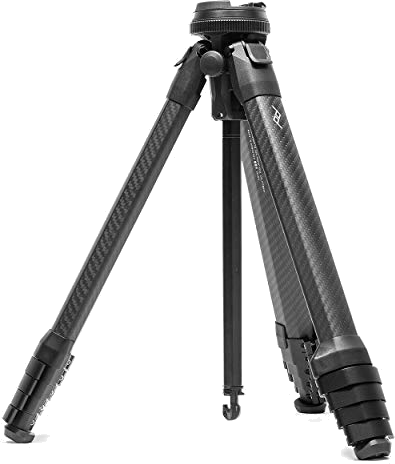
Compact and Portable Carbon Fiber Travel Tripod for Camera
- Compact Design
- Quick Setup and Takedown
- Pro-Level Stability
- Ergonomic Ball Head
- 20 lb Capacity
Star Trackers: Taking Your Images Further
A star tracker is an optional, but highly beneficial, piece of gear once you’ve mastered the basics.
- What it is: A small, motorized device that sits between your tripod and camera. It slowly rotates your camera to counteract the Earth’s rotation.
- Why you’d want one: Without a tracker, Earth’s rotation limits your exposure time to around 20 seconds before stars begin to trail and blur. A tracker allows for much longer exposures (minutes-long), capturing significantly more light and detail from faint nebulae and galaxies without stacking multiple images.
- Top Model: Sky-Watcher Star Adventurer
- Great Budget Option: Move Shoot Move Nomad (super light and only a couple of hundred pounds)
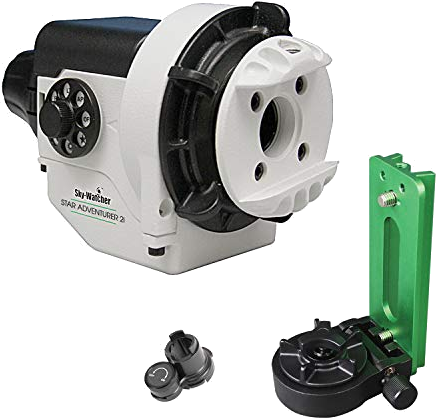
Motorized Star Tracker Equatorial Mount for Astrophotography
- Perfect for capturing the Milky Way and other astronomical objects
- Smartphone controlled using free app
- Deluxe equatorial base helps position at the perfect angle for polar alignment
- Can be used with any photographic tripod
Recommended Astrophotography Setups for 2026
To help you put it all together, here are my top setup recommendations:
The Dream Setup (No Budget Limit)
- Camera: Sony A7R V
- Lens: Sony GM 14mm f/1.8
- Tripod: Peak Design Carbon Fiber Tripod
- Star Tracker: Sky-Watcher Star Adventurer
- Estimated Cost: Well over $5,000
Mid-Range Professional Setup
- Camera: Sony A7 III
- Lens: Sony GM 14mm f/1.8
- Tripod: K&F Carbon Fiber Tripod
- Star Tracker: Move Shoot Move Nomad
- Estimated Cost: Approximately $2,000 – £3,000
Budget Beginner Setup
- Camera: Canon EOS RP
- Lens: Rokinon / Samyang 14mm f/2.8 (Manual Focus)
- Tripod: K&F Aluminum Tripod
- Star Tracker: Bypass for now (focus on mastering camera settings first)
- Estimated Cost: Around $1,000
Starting with Your Smartphone
If even the budget beginner setup is out of reach right now, don’t despair! You can absolutely start with your smartphone.
Modern smartphones have surprisingly capable night modes that can capture decent starry sky images.
See here for our free guide to Smartphone Astrophotography.
Conclusion
I hope this comprehensive guide gives you the confidence and clarity to invest in the right gear to capture amazing Milky Way and starry sky photos in 2026.
Whether you’re aiming for a top-tier professional setup or starting with a budget-friendly option, the most important thing is to get out there and start shooting!
Don’t forget: You can download a quick one-pager cheat sheet with all these recommendations here
Prefer Backyard Astrophotography?
If you find that landscape astrophotography isn’t quite your thing, or if you’re looking for your next challenge, consider deep-sky astrophotography from the comfort of your backyard.
Smart telescopes automate much of the process, making it accessible and incredibly rewarding.
Check out this article or the video below for a rundown of the best smart telescopes for 2026: