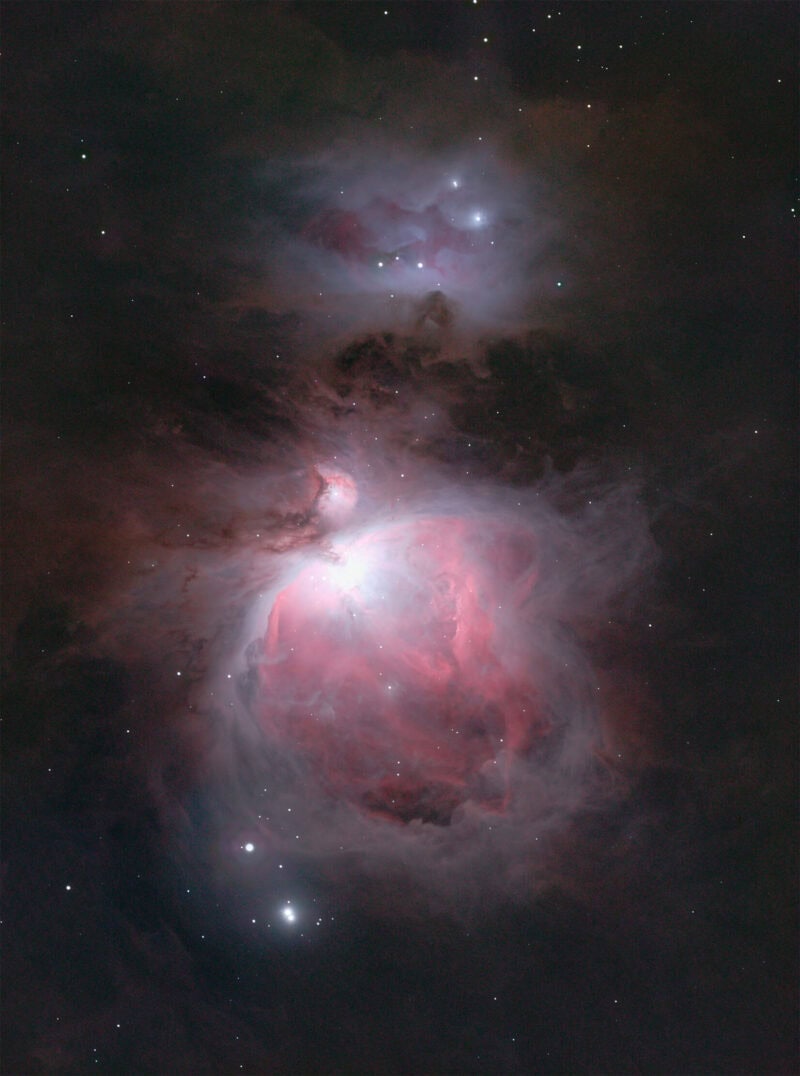
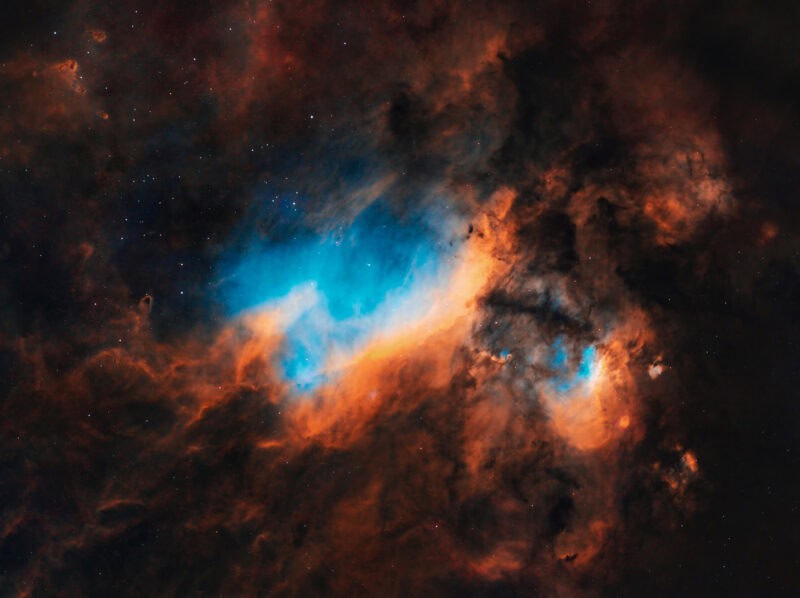
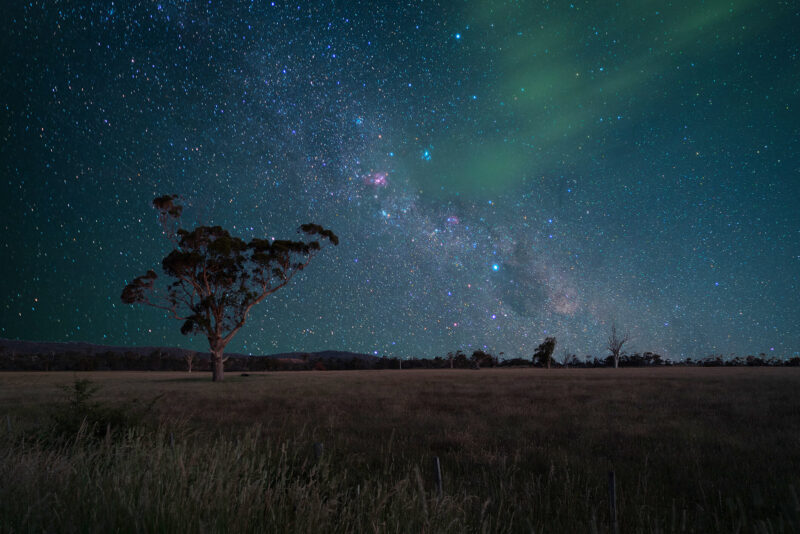
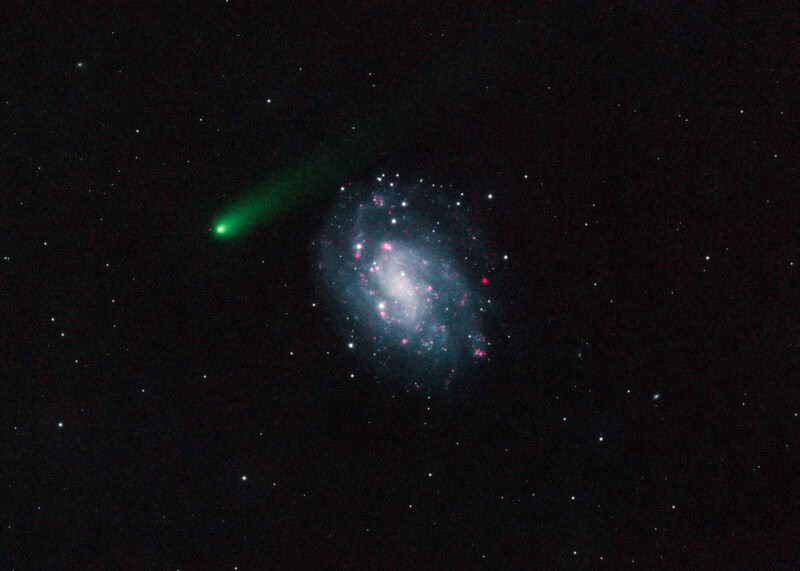
Learn how Charlie Marzolla, a 15 year old from Sydney, Australia juggles school life with capturing images like this:
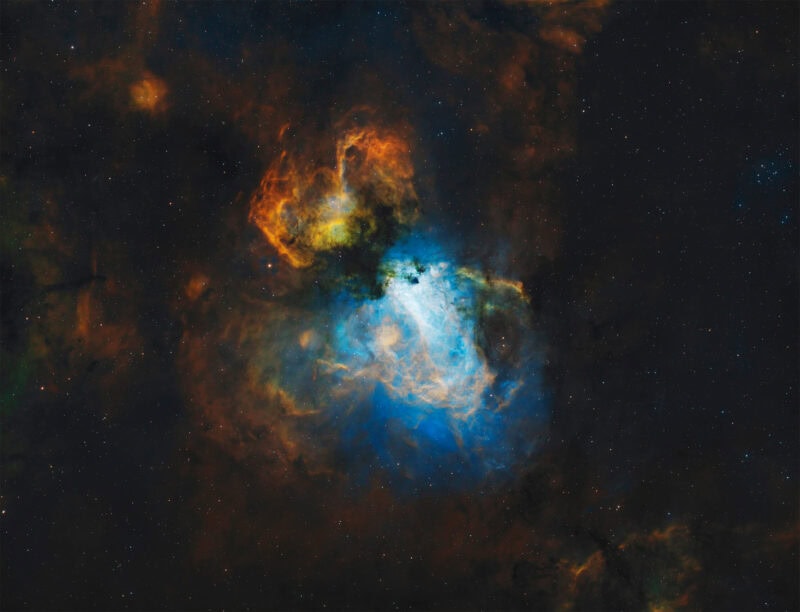
“I started my journey at 13 when I received my first visual telescope, it was able to show me the moon and that’s about it. It was total rubbish!”
How did you get into astrophotography?
I started my journey at 13 when I received my first visual telescope, it was able to show me the moon and that’s about it. It was total rubbish!
Then one night I tried out my dad’s Sony A7R III camera and pointed it at the light polluted city sky, with just a 30 second exposure I was astounded to see a small purple patch in the sky, which turned out to be the Orion Nebula.
Over the last few years I’ve upgraded my gear.
At first a tracking mount, then a telescope and finally a monochrome astrophotography camera.
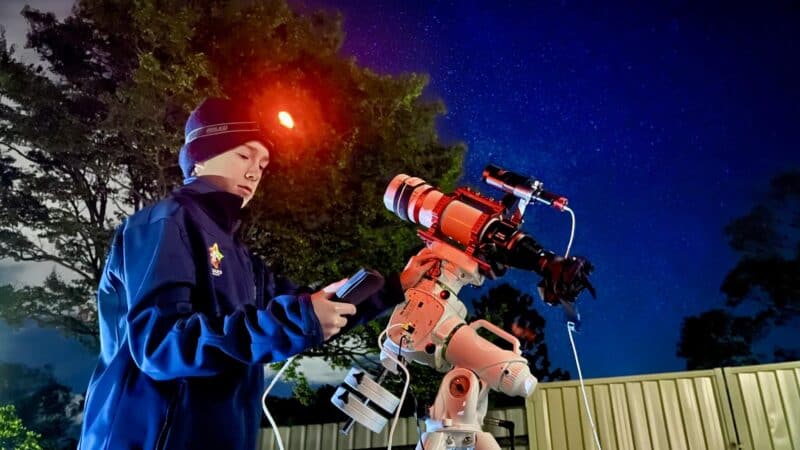
My focus in astrophotography is deep sky imaging with a fast scope and sensitive camera.
My passion is capturing the faintest objects and sharing those breathtaking images with the world.
“The key to getting a good night’s sleep is automation”
How do you deal with the late nights?
The average 21st century teenager doesn’t get any sleep as is, but being an astrophotographer doesn’t exactly help.
Some nights away from home end up going beyond 5am in the morning, which definitely takes its toll on my weekend.
The key to getting a good night’s sleep is automation.
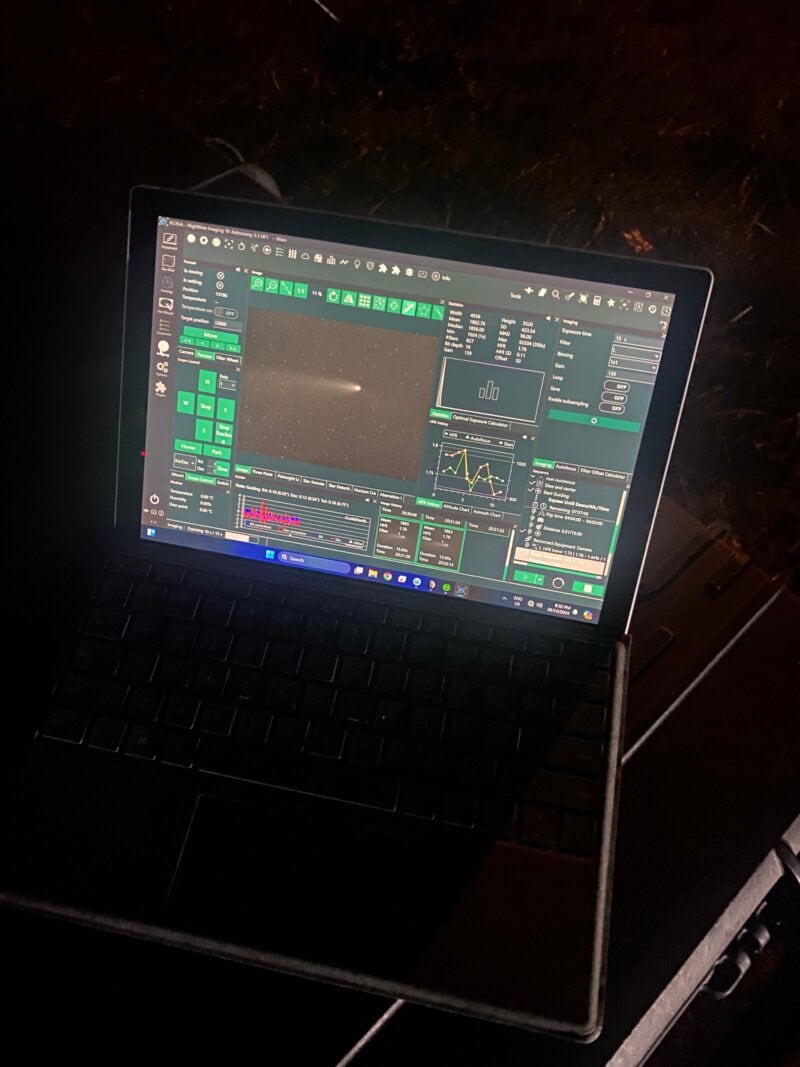
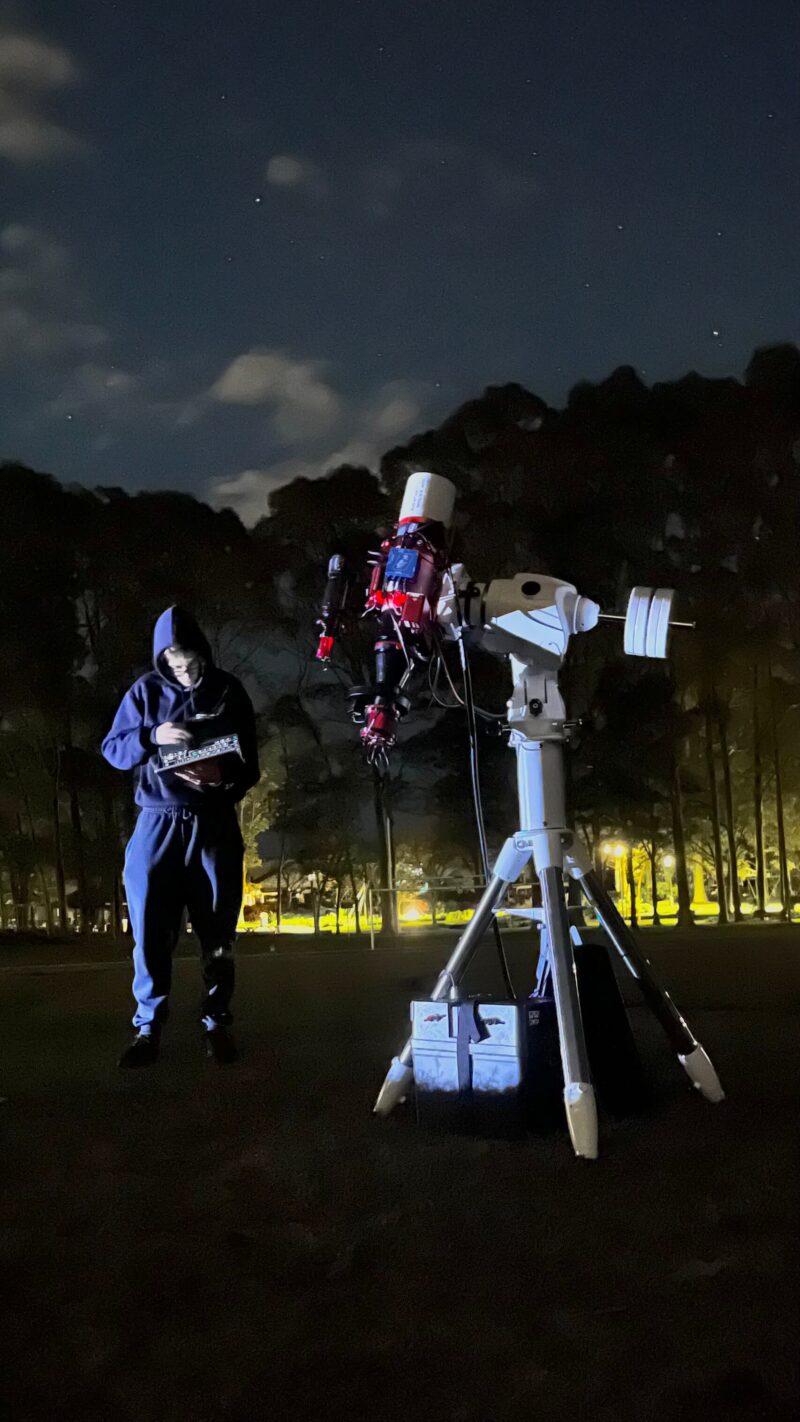
When I image in my backyard I use NINA’s advanced sequencer on a mini-PC to automatically align, focus, switch filters, take images and meridian flip, all while I’m asleep.
I can even remotely connect into my system on my laptop from anywhere at home.
“Quality processing is arguably more important than the gear itself”
What’s your process?
Many people find the practical side of astrophotography frustrating, which is half the reason why people avoid this incredible part of astronomy.
The truth is that on some nights your gear will fail, but overcoming those issues and building the ultimate system is what makes astrophotography so exciting!
I’ve spent months working on my telescope, managing acquisition software and perfecting my Pixinsight processing.
I usually start my process in Stellarium to find a target or a sky survey viewer if I’m looking for something fainter.
The Clear Outside app is very helpful for tracking weather.
I use NINA loaded onto a mini-PC to control my equipment, the built in 3-Point Polar Alignment tool is a lifesaver if you don’t have a view of the celestial pole.
What gear do you use?
Astronomy gear is by nature expensive, but astrophotography takes it to a whole new level.
To fund my obsession I upgraded and refurbished computers and sold them on Facebook Marketplace and received help from my parents.
The biggest help was from members of my local astronomy club who offered some killer deals on otherwise out of reach equipment.
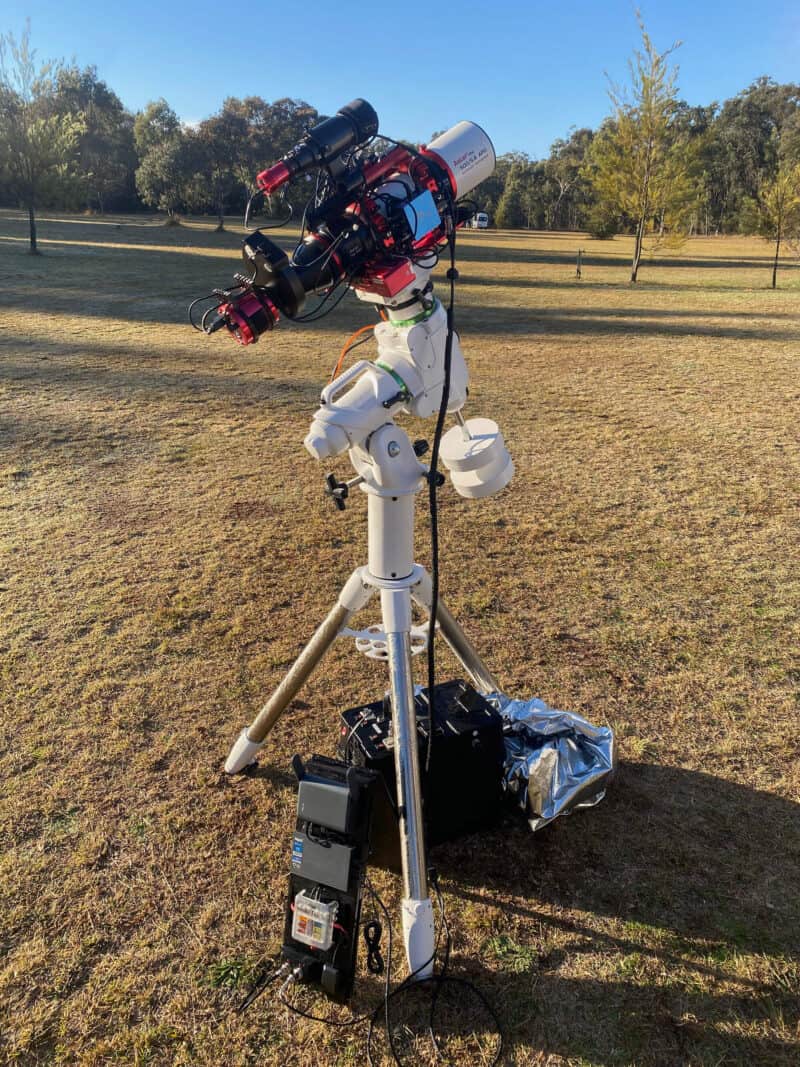
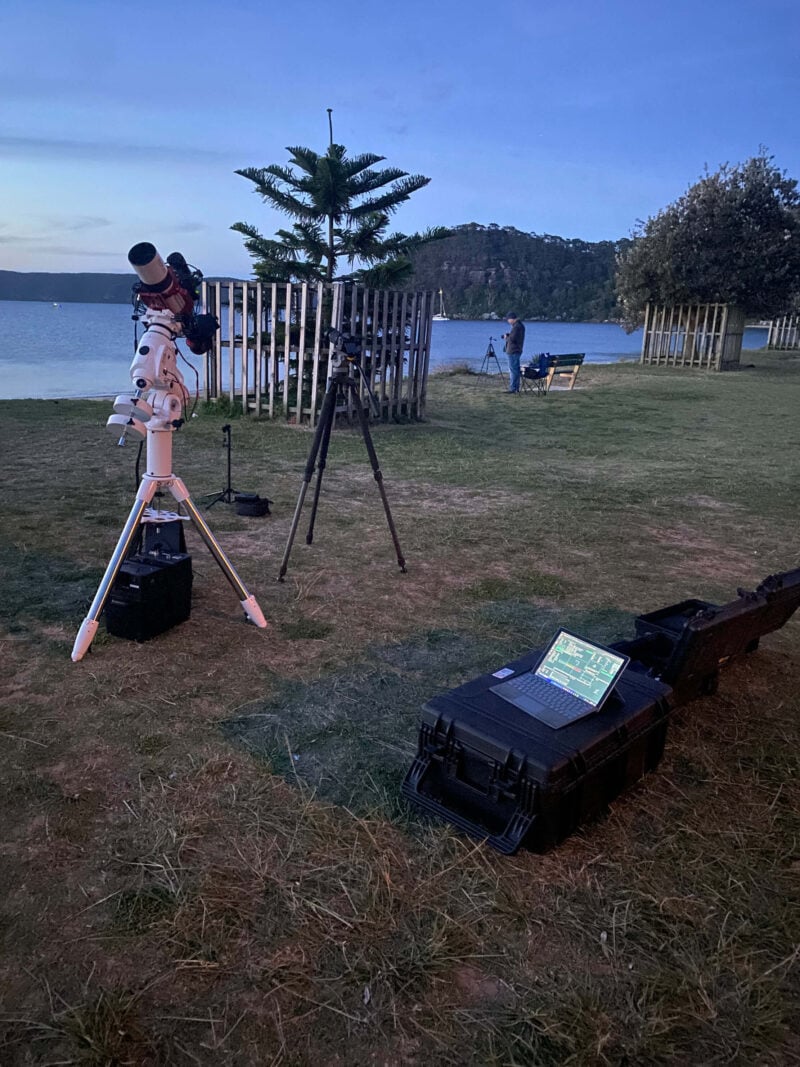
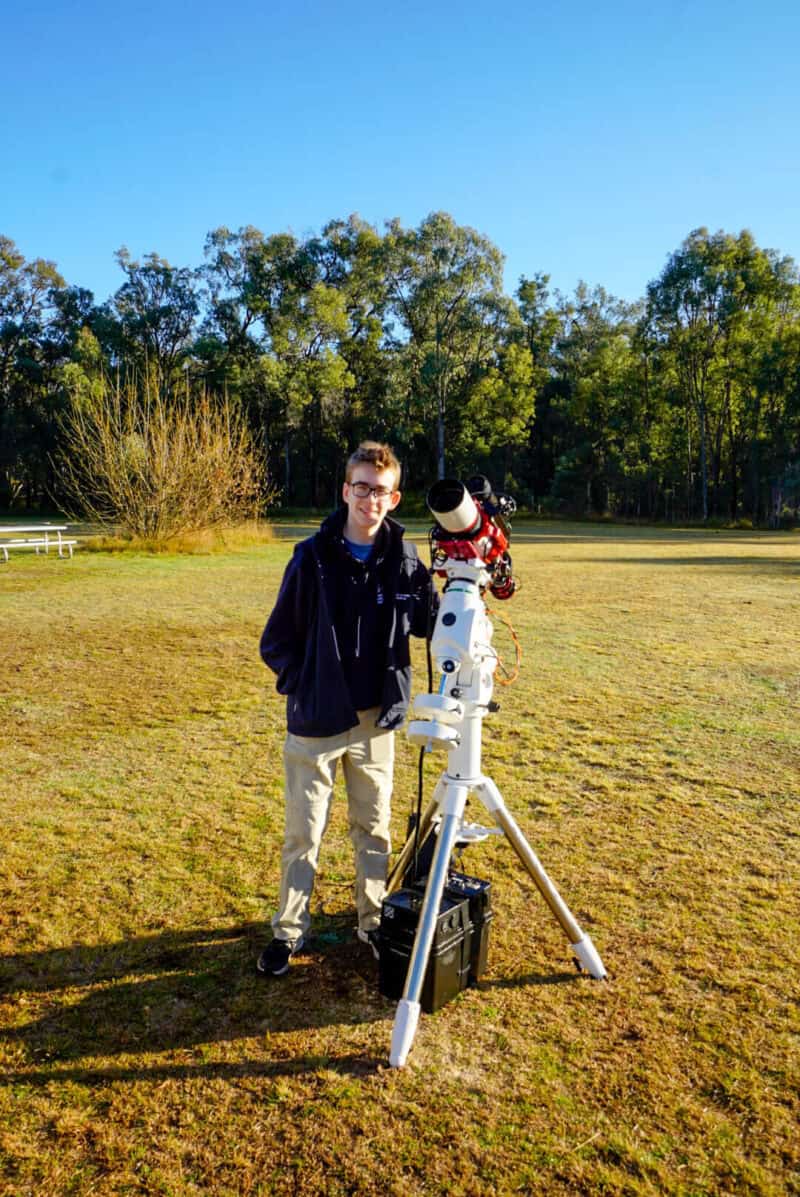
I use a Sky-Watcher EQ6-R Pro mount.
Many people prefer the newer harmonic drive mounts like the ZWO AM5, but although being significantly heavier, the older styles have unmatched tracking performance, especially in windy conditions.
My camera is the ZWO ASI1600MM Pro, a classic monochrome camera that is still going strong (now superseded by the ZWO ASI2600MM Pro).
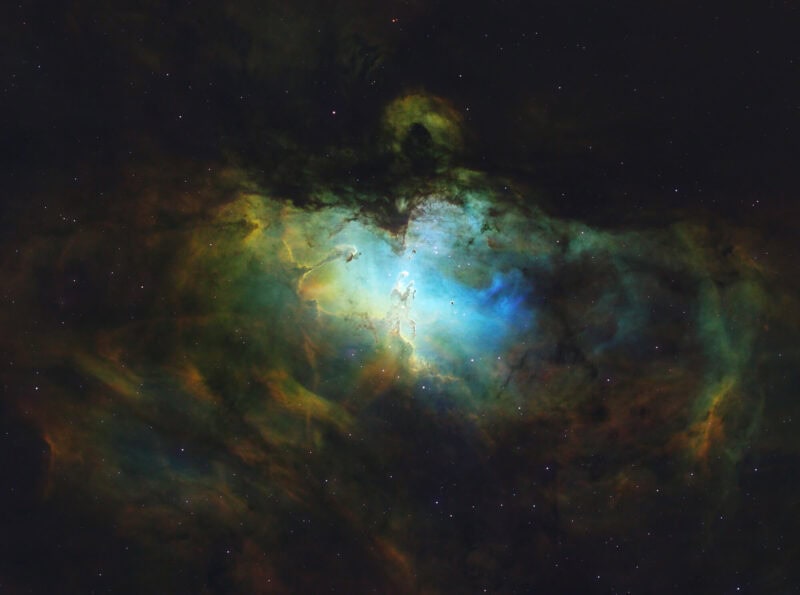
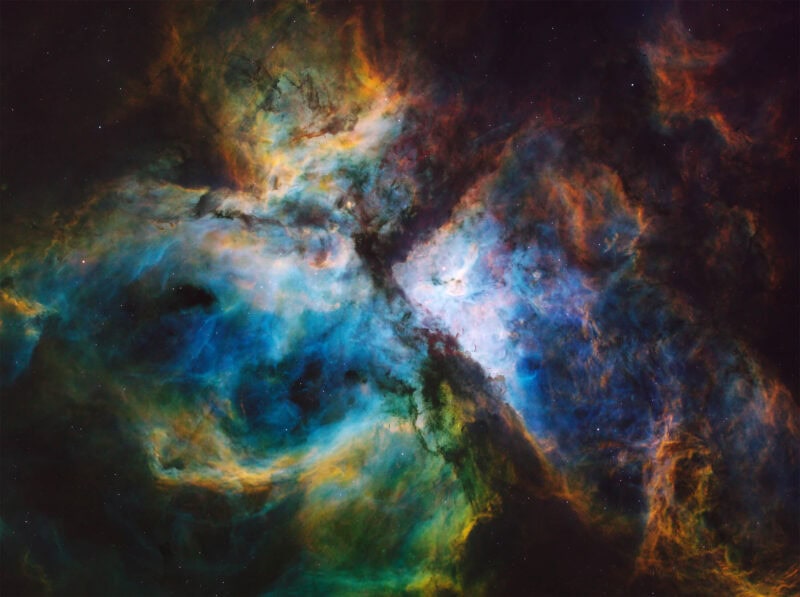
I use it with 7nm SHO and LRGB filters.
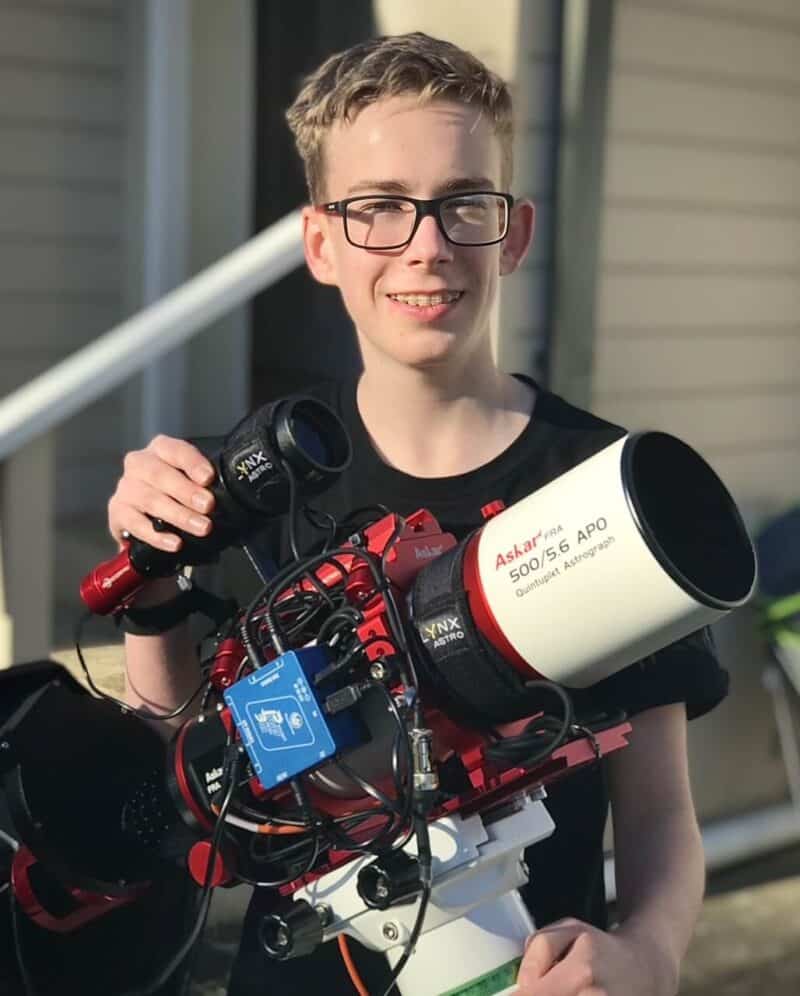
My telescope is the Askar FRA500 F5.6 Quintuplet. Speed is everything and it also looks the part.
Accessories are just as important:
- To focus I use a Primalucelab Sesto Senso 2 auto focuser, these are non-negotiable when using a monochrome camera.
- For powering my equipment, monitoring weather and controlling dew heaters, I use a Pegasus Power Box Micro.
“YouTube can either be a goldmine or headache for astrophotography.”
What do you use for post-processing?
The main software I use for processing is Pixinsight, no other program comes close in terms of performance.
The learning curve is steep and $350 USD plus add-ons can seem expensive for some software, but quality processing is arguably more important than the gear itself.
I’m only just beginning to master Pixinsight and the improvement I’ve seen to my images is astounding.
If you’ve already spent thousands on gear, learning PixInsght is a no brainer.
Any learning resources that you can recommend?
YouTube can either be a goldmine or headache for astrophotography.
Most of the information on choosing and assembling a rig is excellent, however when you get deeper into advanced Pixinsight processing everything becomes a convoluted mess.
My favourite channel that got me interested has to be AstroBiscuit, he makes entertaining and informative astrophotography content.
For deeper topics involving software and Pixinsight I would highly recommend Cuiv The Lazy Geek, lukomatico and Adam Block.
It’s worth noting that every image you take is different and often workflows need to be adapted to work for you.
One of the most valuable pieces of advice I’ve herd came from the renowned photographer David Malin, he said “Respect the light”:
- Your image should showcase the object, but not abuse it.
- Space should not be completely black, and stars should not be blown out.
- Colours should be vibrant, but not overcooked.
I have been guilty of this and the best way to respect the light is to step back for a moment and compare your images to ones from the best.
How are you incorporating AI into your processes?
In the day and age of artificial intelligence I have to include some level of AI in my workflow, however I believe in a balance between creativity and image integrity.
I make use of the popular Pixinsight plugins – Blur, Noise and Star XTerminator.
These applications don’t use AI directly, but instead get used to take measurements and apply transformations to the whole image.
They really only enhance details that are already in my image.
What are your proudest achievements in astrophotography and your ambitions?
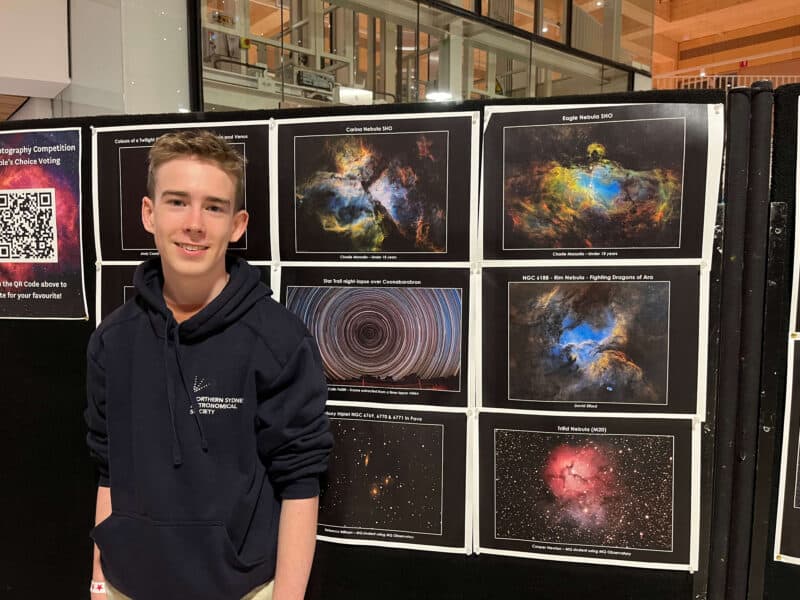
So far my biggest achievement has been winning the Junior category of the CWAS ‘David Malin’ awards 2025, as well as receiving two highly commended mentions and the Editor’s Choice.
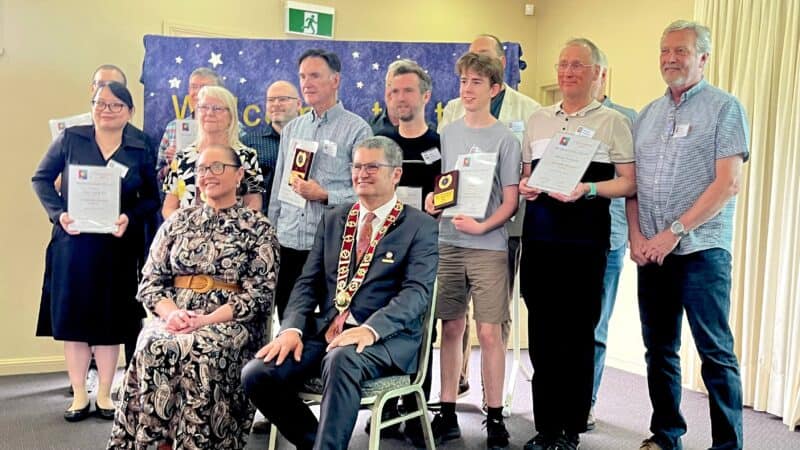
I’ve also won multiple prizes in the Macquarie University ‘Capture the Cosmos’ award this year and in 2024.
In the future I’d love to win the overall ‘David Malin’ awards, the ZWO Photographer of The Year, or get one of my pictures as an AstroBin image of the day.
Ultimately, I aspire to go into science when I leave school in a couple of years, maybe even astronomy.
Where can people follow you online?
More of my work is on Instagram @charliemarzolla.
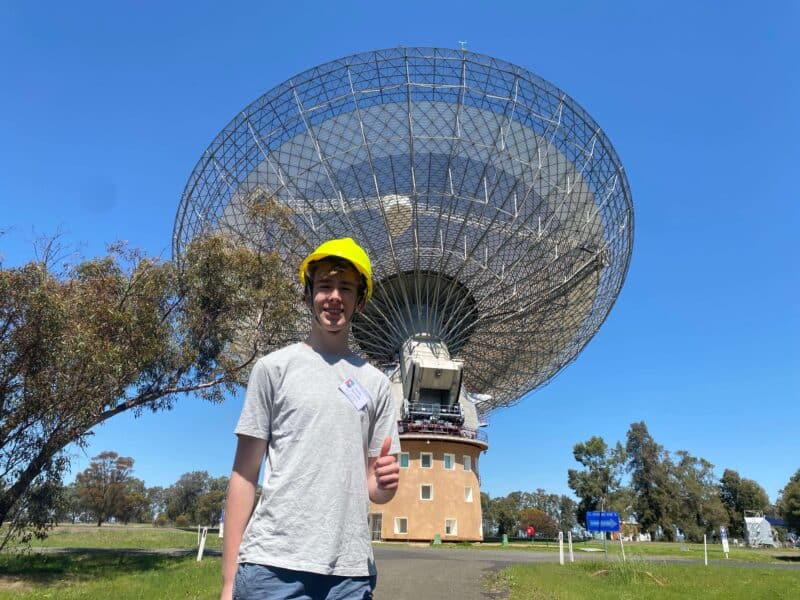
Some of my award winning astro images are also on display at the Parkes Radio telescope and the Sydney Observatory for the next year.