If you’re looking for the best budget smart telescope, there are five good models to consider:
Choosing the right one depends on balancing price, portability, and image power. We break down the key specifications below.

Best Budget Smart Telescopes: Price Comparison
Prices are always subject to change, but here is a starting price comparison (check the current links for live deals):
| Telescope Model | Starting Price | Key Inclusions |
| Vaonis Hestia | $189 | Requires separate tripod and solar filter. |
| ZWO Seestar S30 | $399 | Includes tabletop tripod and accessories. |
| Dwarf Mini | $399 | Tripod not included (must use own or purchase separately). |
| ZWO Seestar S50 | $499 | Includes tripod and all accessories. |
| Dwarf 3 | $549 | Tripod not included, comes with a dedicated carry case. |
Deep Dive: The Five Budget Contenders
Vaonis Hestia: The Smartphone Enhancer
The Hestia is in a bracket all its own.
It is technically NOT a smart telescope because it lacks an internal camera and Go-To mount.
- Cost Advantage: Cheapest starting price at $189.
- How it Works: You attach your smartphone to the device, and it uses your phone’s camera and processing power.
- Limitations: It has no tracking capability, meaning it can only really excel at photographing the Sun and Moon. It cannot capture deep-sky objects.
- Best for: Enhancing smartphone photos of the nearest celestial bodies, extreme portability (no power/Wi-Fi needed).
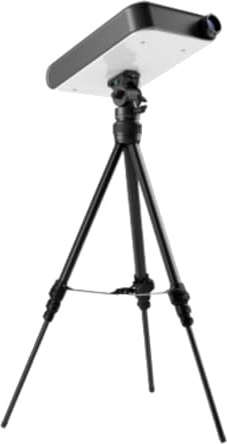
Transform Your Smartphone Into A Smart Telescope
- Extremely easy to use - just attach your smartphone and allow the app to guide you to capture and process astrophotography images
- Compact and portable
- Future-proof with all smartphones compatible
- No tracking will limit capacity to capture deep sky images
- Small aperture compared to a telescope
ZWO Seestar S30 vs. Dwarf Mini: The $399 Tussle
These two are direct competitors and share nearly identical core specifications:
- 30mm aperture
- 2.1MP Sony IMX 662 sensor
- $399 staring price tag
The key choice comes down to software and accessories.
| Feature | ZWO Seestar S30 | Dwarf Mini |
| Portability | Lighter unit, heavier total weight (includes tripod). | Heavier unit, lighter stated weight (tripod not included). |
| Inclusions | Includes a basic tripod. | Tripod not included. |
| App/Software | Simpler, more intuitive—great for beginners. Highly automated. | More complex—offers greater capacity for manual control and parameter experimentation. |
| Recommendation | Better for quick, automated results and beginners. | Better for hobbyists who want to push imaging limits. |

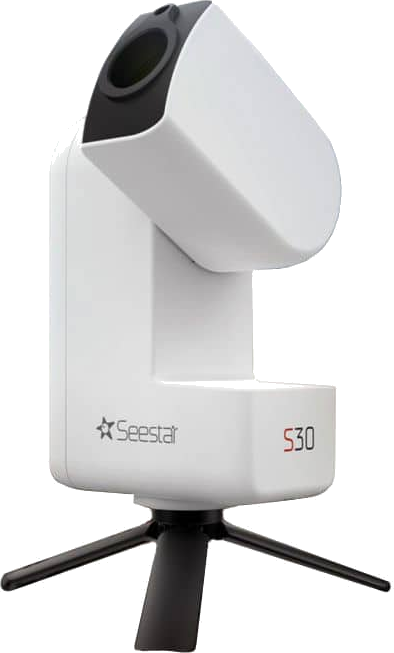
Budget Portable Smart Telescope
- Extremely small, light and portable
- 30mm aperture and 150mm focal length
- ZWO has a track record of delivering high-performing astrophotography gear
- Relatively small size & weight also means relatively low telescope specs
ZWO Seestar S50: The Power Budget King
The S50 is the “big brother” to the S30 and, despite being the oldest on this list (released 2023), still offers the most light-gathering power in this price tier.
- Aperture Advantage: At $\approx$ $499$, the 50mm aperture is the highest of all five budget models, putting it on par with some premium Vespera models.
- Trade-Off: It is bigger and heavier than the other budget options, making it slightly less convenient for travel.
- Best for: Those who prioritize light-gathering capacity (aperture) above all else, while still keeping the price under $500.
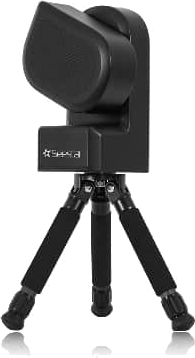
Budget Portable Smart Telescope
- Take astrophotography images with the press of a button
- 50mm aperture and 250mm focal length
- ZWO has a track record of delivering high-performing astrophotography gear
- Slightly bigger than its main competitor (the Dwarf 3) and the Seestar S30
- Relatively low resolution at 2MP
- Not great for planetary imaging
Dwarf 3: The Flexibility Champion
The Dwarf 3 is the most expensive in this group, but it justifies the price with superior camera resolution and portability features.
- Price: $549 (tripod not included).
- Camera Resolution: A whopping 8.3 megapixels—far beyond the other 2MP budget models, and equal to some premium models.
- Flexibility: Includes a wide-angle lens for landscape astrophotography (Milky Way), time-lapses, and standard photography.
- Portability: Weighs more than the Mini/S30, but its shape and size, plus an included carry case, make it ideal for traveling.
- Best for: Users seeking the best camera resolution and maximum flexibility beyond deep-sky imaging.
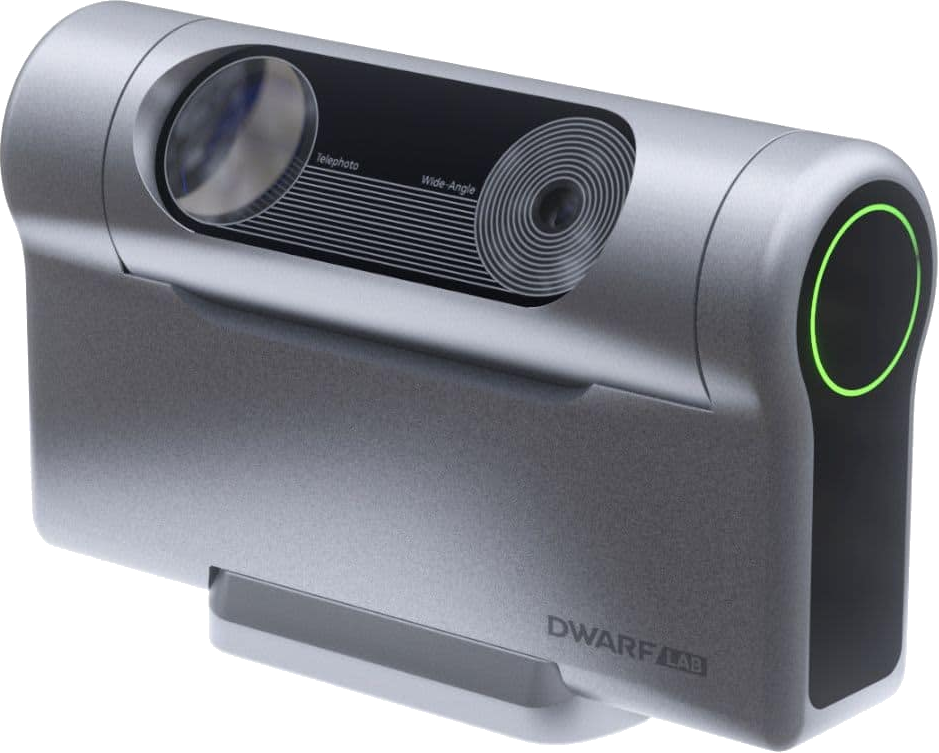
Budget Smart Telescope
- Shoot deep space objects in minutes with no expertise or experience necessary
- Great value at a budget price
- Light and portable - easy to store and travel with
- Limited image quality with relatively low aperture
- Not good for planetary imaging with short focal length
- Slightly fiddly setup and calibration processes
? Final Recommendation Summary
| If you want… | Choose This Model | Reason |
| The absolute cheapest option (but limited ability) | Vaonis Hestia | Best portability, lowest cost, but not a true smart telescope. |
| The best balance of price and simplicity | ZWO Seestar S30 | Good all-around specs, includes a tripod, and has the easiest beginner app. |
| Manual control for maximizing image quality | Dwarf Mini | Identical specs to S30, but the app allows for more advanced parameter control. |
| The most light-gathering power (aperture) | ZWO Seestar S50 | 50mm aperture is the highest in this group. |
| The best camera resolution and travel flexibility | Dwarf 3 | 8.3MP resolution and wide-angle lens for versatility, best for traveling. |
To compare all smart telescopes at all prices, see here, or watch the video below: