If you want the best smart telescope for 2026, in my opinion, it’s a straight-up choice between the Unistellar Odyssey Pro and the Celestron Origin Mark II.
These are both amazing, premium devices with a telescope camera built-in, all controlled by a single smartphone app.
I’ve had my hands on many different smart telescopes, and in this article I’m going to compare these two top models and explain which one is the right one for you.
To get a full visual breakdown, you can watch my comprehensive comparison video right here:

The Unistellar Odyssey Pro: The Ultimate Grab-and-Go Experience
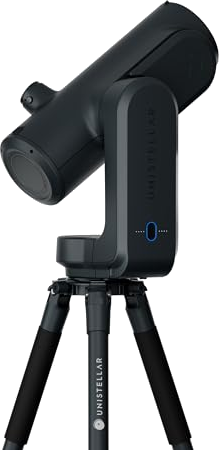
The Unistellar Odyssey Pro was released in 2024. Prior to this Unistellar had four smart telescopes, the:
These were all excellent but required collimation—a manual adjustment process that’s a minor barrier to the true “grab-and-go” experience most people want from a smart telescope.
The Odyssey and Odyssey Pro solve this problem: they do not require collimation.
This makes them perfect for anybody who wants to use them casually, has no experience with traditional telescopes, and just wants the device to work straight out of the box.
The Odyssey Pro also includes the unique electronic eyepiece, developed in partnership with Nikon.
You can get a feel for what this looks like here (I took this using my smartphone):

If you’re using this in your backyard, on your balcony, or wherever you’re going to have it, the ability to occasionally share the view with friends or family by getting them to look through the eyepiece is simply more impressive than showing a photo on your phone.
Even if you’re alone, it’s kind of cool just to look through and see the image building in real-time rather than just watching it appear on your phone screen.
The Celestron Origin Mark II: Pure Astrophotography Power
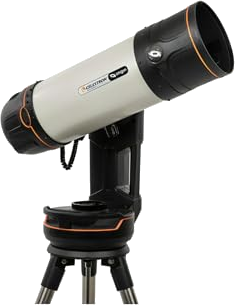
Celestron, an American company, has been one of the leading astronomy and astrophotography gear manufacturers for decades.
They released the original Origin smart telescope in 2024 and updated it at the end of 2025 with the Mark 2 model, which features an upgraded camera.
The Celestron Origin Mark II is the best smart telescope for astrophotography, specifically for producing the highest quality deep-sky images.
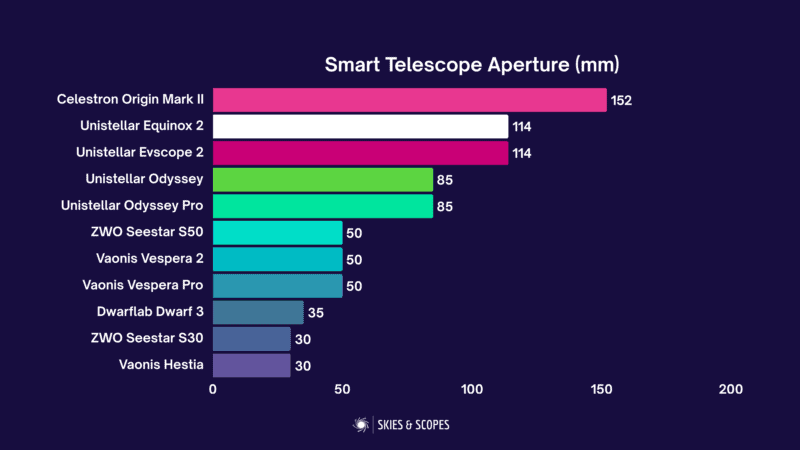
It has the best telescope component on the market: a 6-inch aperture Rowe-Ackermann Schmidt Astrograph (RASA).
Aperture is the best indicator of light-gathering power and how well a telescope will perform. As you can see from this chart comparing smart telescope apertures, the Celestron Origin Mark II stands out significantly:
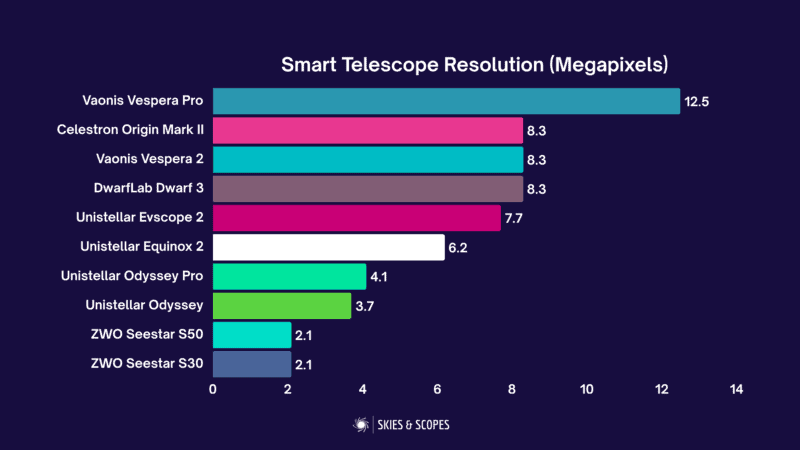
The camera was upgraded from 6.4 megapixels up to 8.3 megapixels (Sony IMX678 Starvis 2), giving it fantastic resolution to pair with its superior optics.
This puts it among the top in camera resolution, as shown here:
Celestron Origin Mark II: Downsides
For all its imaging power, the Celestron Origin Mark II has some noticeable downsides compared to the Odyssey Pro:
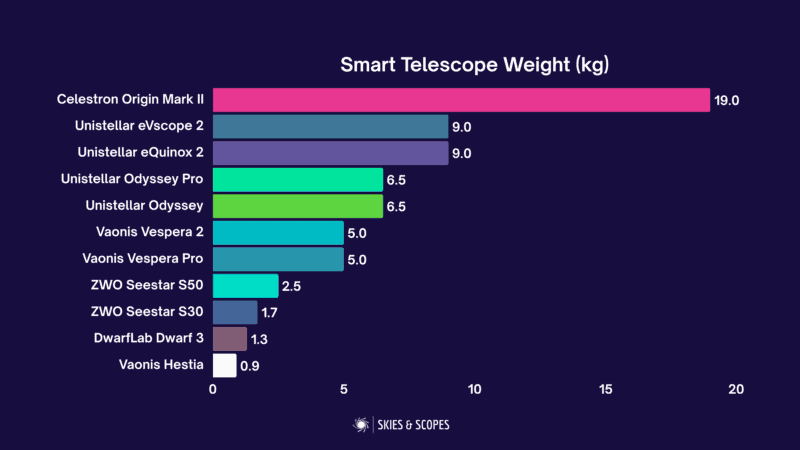
- Size and Weight: It is pretty big and heavy, weighing around three times as much as the Odyssey Pro (approx. 41.6 lbs total system weight). You can see a weight comparison of smart telescopes here:
- Collimation Required: Like other models, it may require occasional collimation. While not overly technical, it’s an adjustment a casual user might not want to deal with.
- No Eyepiece: It lacks the real-time viewing experience of the eyepiece.
The Celestron Origin Mark II is the telescope for those who want to concentrate on the astrophotography element.
It will produce better images, but the added weight and need for occasional collimation make it more suitable for a solo, dedicated hobby, much like a traditional astrophotography setup.
Here’s how they directly compare on key stats:
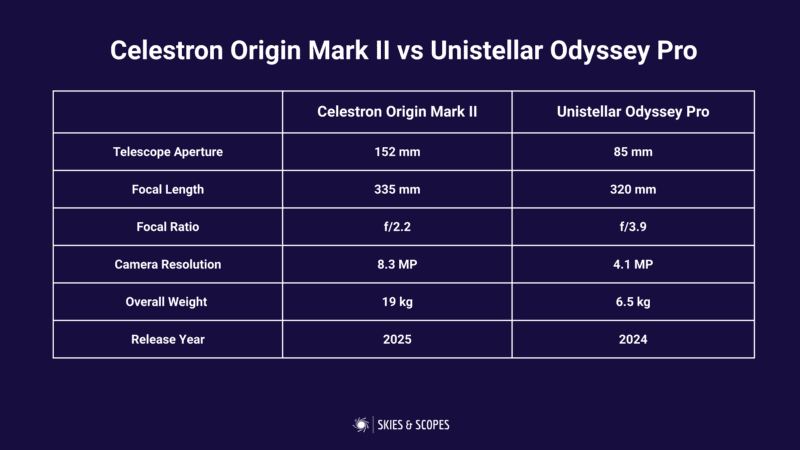
Celestron Origin Mark II Vs Unistellar Odyssey Pro: Which is right for you?
The decision really comes down to your priorities and how you plan to use the telescope.
Choose the Unistellar Odyssey Pro if…
- You want the ultimate ease-of-use and social experience.
- It is light, simple to pull out of the box, and you can rely on it to work without adjustments, even if you haven’t used it for a month.
- The ability to share the view through the eyepiece with friends or family on a clear night is a fantastic bonus.
Premium Smart Telescope
- Easy to use and perfect for complete beginners
- Features eyepiece for live viewing of the night sky
- Portable with a compact size and light weight
- Lower spec than premium alternatives
- Premium price
Choose the Celestron Origin Mark II if…
- Your primary goal is best-in-class astrophotography images.
- If you’re willing to deal with the extra weight, size, and the occasional need for collimation for the sake of superior image quality, the 6-inch RASA optics of the Origin M2 will deliver the best results.
Brand new smart telescope from Celestron in 2025
- Large 6-inch aperture RASA astrophotography telescope
- Fast f/2.2 focal ratio
- 8.3 MP camera
- All-in-one package that takes astrophotography images for you at the press of a button from your smartphone
- The best smart telescope for imaging
- Weighs over 19 kg / 40 lbs
Considering Other Options
If you’re still weighing your options, here are a few other high-quality smart telescopes:
- Unistellar eVscope 2: This is a higher-spec model than the Odyssey Pro with a larger aperture (114mm) and the eyepiece, but it does require collimation, sacrificing the grab-and-go ease. See our Unistellar Evscope 2 review.
- Vaonis Vespera 2 or Vespera Pro: These models have good cameras—the Vespera Pro has one of the highest resolution sensors of all smart telescopes. They are slick and easy to use, but their aperture is smaller (50mm) compared to the premium Unistellar and Celestron options.
- Budget Smart Telescopes: If you are new to the hobby, options like the ZWO Seestar S50, ZWO Seestar S30, DwarfLab Mini, and Dwarf 3 are well worth looking at for their excellent value, though they won’t match the image quality or features of these premium units.
If you’d like to understand how these budget models compare, check out this article or watch the video:

More information
See our smart telescopes hub for more reviews and comparisons like this.
To see how these models stack up against all 12 smart telescopes currently available on the market, watch this video: